Bringing Music Therapy Into Talk Therapy Spaces
by Cassie Meredith, A-LPC-MHSP, MT-BC
Think of the term “music therapy.” What images come to mind? Do you see joyful scenes of small children dancing with brightly colored scarves or babies learning how to babble through the song “The Wheels on the Bus?” Do you imagine famous people crooning at charity concerts and giving autographed guitars to hospital patients? Do you not see anything at all because, honestly, you’ve never heard of music therapy and haven’t ever given it much thought?
While dancing with scarves and singing to toddlers are great examples of what music therapy can be, music can also be used in the mental health treatment of all ages, including adults! In this blog post, we will do a brief dive into what music therapy is, how it is used in mental health sessions, and how to advocate for more music in your talk therapy spaces.
What is music therapy?
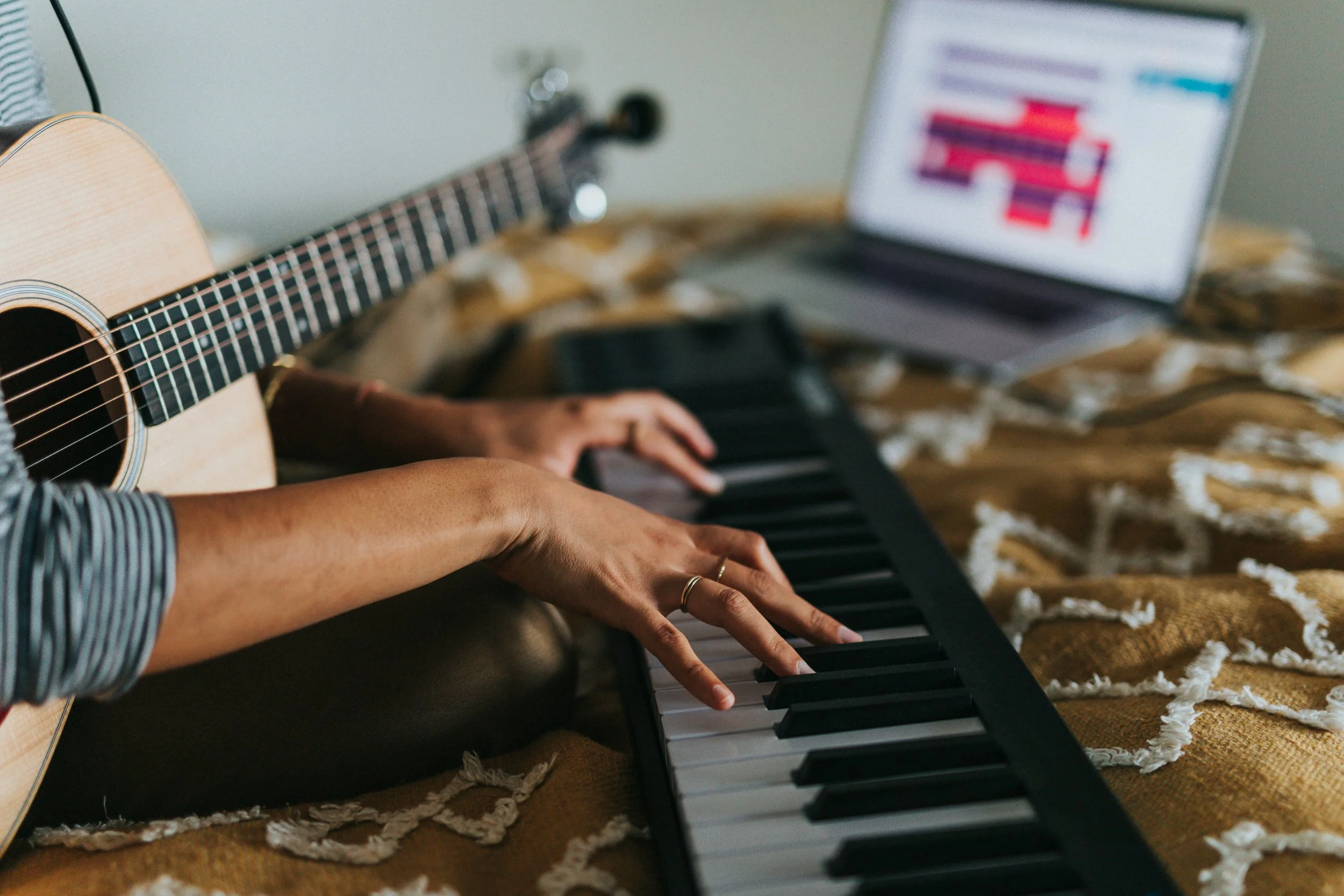
According to the American Music Therapy Association (the governing body for music therapy licenses in the USA), music therapy is defined as “the clinical & evidence-based use of music interventions to accomplish individualized goals within a therapeutic relationship by a credentialed professional who has completed an approved music therapy program” (AMTA, 2005). In real human language, music therapy is the use of music to achieve non-musical goals with the help of a licensed music therapist.
Think of it this way: Therapeutic Goal + Music + Licensed Music Therapist = Music Therapy
But Cassie (you might be thinking), what if one of those three elements is missing? Am I still participating in music therapy? Nope! You might be using music in a therapeutic way, but technically, you can’t call it “music therapy.” Using music to help you mentally is not a bad thing! You just can’t call it music therapy for reimbursement and research purposes. It’s more of a technical thing, so don’t worry about it unless you are a professional trying to falsely advertise your zumba classes as music therapy to insurance companies. Then that is fraud, and fraud is a no go.
Who are music therapists? Music therapists will all have the license “music therapist - board certified,” or MT-BC, in good standing with the Certification Board for Music Therapists (CBMT). Music therapists have to achieve a bachelors or masters degree in music therapy, complete a 1200 hour clinical internship, and pass a licensure exam in order to get their credential. All music therapists have training in multiple instruments, psychology and counseling methods, and understanding on how music can impact different areas of human functioning. Every 5 years, music therapists have to renew their license with 100 hours of continuing education credits. It’s a lot of work to be a certified music therapist, so you can understand why some people might get a little cranky when people use the term “music therapy” to describe what Billy Bob is doing on the street corner on weekends to cheer up the masses. We appreciate the Billy Bobs of the world, but we also need to be clear that he (most likely) is not a licensed professional. Again: no fraud, please and thank you.
Music Therapy and the Mental Health World
Although lesser known than art therapy, music therapy does have some scientific backing in the mental health world!! I’m about to go into some specific studies, so if science is boring to you, feel free to just believe me and skip to the next section.
For those of you who are still here, music therapy and mental health has been studied in these main areas:
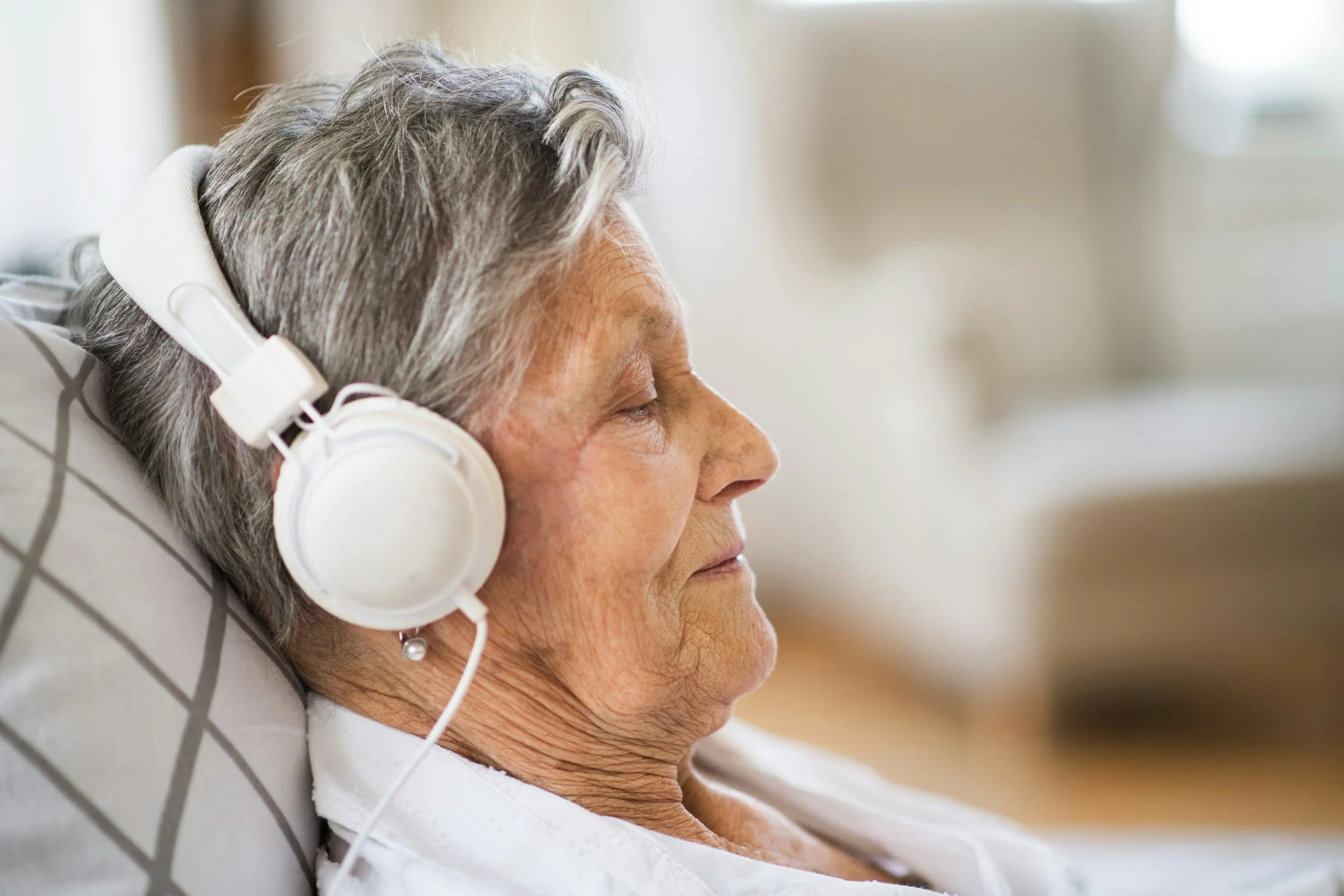
Reducing Stress: in a 2022 meta-analysis, de Witte et. al found a “medium to large effect on stress-related outcomes” when people used music therapy independently or in conjunction with other types of mental health treatment. “Stress-related outcomes” included the physical responses to stress, such as blood pressure and cortisol, as well as self-report measures from participants. A total of 47 studies were used in this analysis, and all of the participants were adults.
Reducing Anxiety Symptoms: de Witte et al. are back in this 2025 meta-analysis on music therapy and its effect on anxiety symptoms! In this analysis, the researchers used 51 studies to determine that music therapy had a moderate effect on self-report symptoms of anxiety, and a mild effect on soothing physical anxiety symptoms such as increased heart- and breathing rates. The best results occurred when participants combined active music making and passive music listening exercises.
Reducing Depression Symptoms: according to this meta-analysis by Tang et al. (2020), music therapy has a “clinically significant effect” on reducing depression symptoms when measured by depression assessments such as the PHQ-9 and HAMD. This analysis included 55 studies with adults, and the most impactful single intervention was “recreative music therapy,” or music therapy that involves improvisation and musical play for fun.
Reducing Negative Mental Health Symptoms with Age: Salihu et. al (2024) took the whole science thing a step further, and they did a meta-analysis of systematic reviews (they analyzed the studies that analyze studies). In this review of 20 other studies, they found that music therapy interventions have a “mild-to-moderate” positive effect on the physical manifestations and self-report mental health symptoms of adults with dementia and cognitive decline. This is huge news because lots of adults with cognitive decline report high levels of anxiety, agitation, and depression as they age.
Music Therapy Vs. Just Listening to Music: finally, this last meta-analysis by Zhang et. al (2025) explored the difference in “reported quality of life” when participants were given music therapy, passive music listening without a therapist, or instrument lessons. Although all three types of music use resulted in “mild” improvements in the participants’ quality of life, the group with real music therapy, led by a licensed music therapist, had the highest improvement out of all three groups. Licensed music therapists for the win!
All of these studies will be cited at the end of this blog post. These are just a few notable, recent studies! If you want to read more, check out the Journal of Music Therapy or the AMTA website.
Examples of Music Therapy Interventions in Mental Health
Alright! You made it past all of the meta-analyses and science talk! Now you are probably curious about what music therapy actually looks like in practice for adults in mental health treatment.
Here are some common examples of what a music therapist might help you do in sessions, organized by therapeutic goals:
Increasing Mindfulness
a. Instrument Identification: Identify a specific instrument to focus on each time a song plays
b. Non-judgmental Observation: Listen to music and make factual, non-judgmental statements about what you hear (tempo, dynamics, instruments, texture, etc.). Bonus if the music is from a genre people do not typically listen to
c. Count the Words: Count how many times one specific word appears in a song
d. Finish the Lyric: Have lyrics printed out with blank spaces periodically throughout to encourage careful, focused attention
e. Music-Assisted Meditation: Use music as a background during meditations to help soothe overactive minds
Encouraging Emotion Regulation
a. Iso Principle Playlists: Create a playlist of songs that start at one emotional extreme and slowly shift to a different emotion (i.e. anger -> calm)
b. Paired Breathing with Music: Most popular music today is organized in 4’s. Breath in tempo with the music to complete most common paced breathing exercises
c. Dancing/Singing as a Way to Close the Stress Cycle: Dancing and singing are great ways to use the body to trick the mind into feeling safe and regulated
d. Building Mastery: Learning about music, playing an instrument, or writing songs can be a great way to build self-esteem and mastery
Improving Emotional Expression
a. Pick a Song: Choose songs that represent certain emotions, memories, people, etc., and allow time to explain why those songs resonate
b. Lyric Analysis: Select a song with pertinent themes and dissect the lyrics. What did the songwriter mean? Do you agree? Are there cognitive distortions present? Does this reflect your life at all? Etc.
c. Where Do You Feel That in the Body?: Play different songs and identify what emotion the music is portraying and where in the body you feel that music
d. Blackout Poetry: Using lyric printouts, “write” your own songs by marking out pieces of the existing lyrics.
e. Music and Art: Draw or color a representation of the music they are hearing and explain why they chose those specific colors and patterns
Communication, Social Skills, and Rapport
a. Drumming: Using call-and-response or similar drumming techniques, people can practice active listening, conversational flow, and nonverbal communication
b. Improvisation: Improv is making music without specific musical notations in front of you. Improv helps with nonverbal communication skills, active listening, turn taking, emotional expression, and building trust between people
c. Finish the Lyric: Pausing a song to force people to finish the lyrical line can help with building vocabulary, improving memory skills, and recognizing social cues to speak
d. Songwriting: writing and composing an entirely unique song, or re-writing a classic that you already know, can help address communication and connection with people through expression
Assisting in Somatic (Body-Based) Work
a. Playing Instruments: What better way to get in touch with your felt experience than making music with your own hands, instruments, and body? Instrument play can be improvisational or more classical (with sheet music and specific techniques)
b. Dancing: Music and movement can be a fantastic way to regulate and also reconnect with your body after dissociation and disconnection. Dancing can be intense (think hip-hop) or relaxing (think slow ballet)
c. Body Percussion: body percussion (or making rhythmic beats with your hands, feet, and body) can mimic the therapy technique of somatic tapping. Body percussion can be independent or completed with another person for co-regulation and connection
d. Singing and Humming: singing and humming can activate the vagus nerve and calm the body in order to return it to “rest-and-digest” mode
How Do I Request Music Therapy in MY Sessions?
There are three main ways to get more music into your traditional talk therapy sessions, and each of them has their pros and cons! Depending on what you are looking for, you can search out different options.
Ask your therapist to incorporate music: probably the easiest way to have more music in your therapy is to ask your therapist to use more music! Your therapist is likely qualified to use music to enhance their existing modalities, whether they are musically trained or not. The comfort and musical training of your current therapist can limit the number of interventions they are willing to use with you, and it might feel clunky or unusual the first time you both try something new together. If your therapist wants to use music but is unsure how, feel free to show them the blog post above to give them some ideas. Training and continuing education classes are also available to help them.
Find a Licensed Music Therapist: if your current therapist is unable to bring as much music into your sessions as you are wanting, you can always find an MT-BC near you! You can choose to supplement your talk therapy with true music therapy sessions from another provider. This can open up incredible opportunities for interdisciplinary collaboration and deep musical experience. However, this options can also be expensive (finding a whole extra provider, who likely doesn’t take insurance, might not be feasible for you!). Additionally, most MT-BC’s are NOT therapeutically trained higher than the bachelor’s level. MT-BC’s are qualified to work on “here-and-now” mental health symptoms, and they might not be comfortable or capable of diving deep into trauma work or intersectional issues.

Find the Best of Both Worlds: If you want a one-stop-shop for both music therapy and counseling, find a provider that is both a licensed therapist and a licensed music therapist! These providers are rare, but they are becoming more and more popular as music therapy gains scientific traction. Clinicians with both MT-BC and their counseling license of choice have the musical training, a music psychology background, and traditional therapy education. They have spent significant time getting trained by both music therapists and traditional talk therapists, and they would love to incorporate both into your mental health journey.
TLDR?
Music therapy is the use of music by a licensed MT-BC to address therapeutic goals. Although it is stereotypically a small-child-friendly, fun, playtime modality, music therapy can be used to great effect with adults in mental health treatment spaces. You can access music in a therapeutic way with your current therapist, or find a music therapist in your community to enhance your connection with yourself and the world around you. Widen your horizons and get musical!
Sources:
American Music Therapy Association - www.musictherapy.org
de Witte, M., Pinho, A. D. S., Stams, G. J., Moonen, X., Bos, A. E. R., & van Hooren, S. (2022). Music therapy for stress reduction: a systematic review and meta-analysis. Health psychology review, 16(1), 134–159. https://doi.org/10.1080/17437199.2020.1846580
de Witte, M., Aalbers, S., Vink, A., Friederichs, S., Knapen, A., Pelgrim, T., Lampit, A., Baker, F. A., & van Hooren, S. (2025). Music therapy for the treatment of anxiety: a systematic review with multilevel meta-analyses. EClinicalMedicine, 84, 103293. https://doi.org/10.1016/j.eclinm.2025.103293
Salihu, D., Chutiyami, M., Bello, U. M., Sulaiman, S. K., Dawa, K. K., Hepworth, A., Adeleye, K. K., & Alruwaili, M. M. (2024). A meta-review of systematic reviews on the effectiveness of music therapy on depression, stress, anxiety and cognitive function in adult's with dementia or cognitive impairment. Geriatric nursing (New York, N.Y.), 60, 348–360. https://doi.org/10.1016/j.gerinurse.2024.09.014
Tang, Q., Huang, Z., Zhou, H., & Ye, P. (2020). Effects of music therapy on depression: A meta-analysis of randomized controlled trials. PloS one, 15(11), e0240862. https://doi.org/10.1371/journal.pone.0240862
Zhang J, Lu Y, Mehdinezhadnouri K, Liu J and Lu H (2025) Impact of music-based interventions on subjective well-being: a meta-analysis of listening, training, and therapy in clinical and nonclinical populations. Front. Psychol. 16:1608508. doi: 10.3389/fpsyg.2025.1608508