
Forest Bathing, Mental Health & How to Actually Connect With Nature - But For Real podcast #53
We’ve all heard some version of the advice: Go outside. Touch grass. Get off your damn phone. And listen—we get it. Most of us are spending a frankly bananas amount of time staring at screens, bouncing between notifications, consuming an infinite stream of information, and wondering why our nervous systems feel like they have 37 browser tabs open at once. It makes sense that “go outside” has become one of the default prescriptions for feeling stressed, anxious, distracted, or generally crispy.
But what if you’re not exactly an outdoorsy person? What if hiking sounds less like restorative self-care and more like voluntarily becoming sweaty while bugs attack you? What if being alone in the woods makes you anxious instead of peaceful? And do you really need to become the kind of person who owns six pairs of specialized hiking socks before you can benefit from spending more time with the natural world?
Thankfully: absolutely not.
In this episode of But For Real, we’re talking with psychotherapist and certified forest therapy guide Georgia Bromehead about forest bathing, nervous system regulation, embodiment, trauma, attachment, and why reconnecting with nature can be much simpler—and much less performative—than we tend to make it. Georgia became the first practicing Association of Nature and Forest Therapy Guide in Nashville and has been guiding since 2019, so she has spent years watching what happens when people are given permission to slow down, use their senses, and interact with the natural world without trying to accomplish anything.
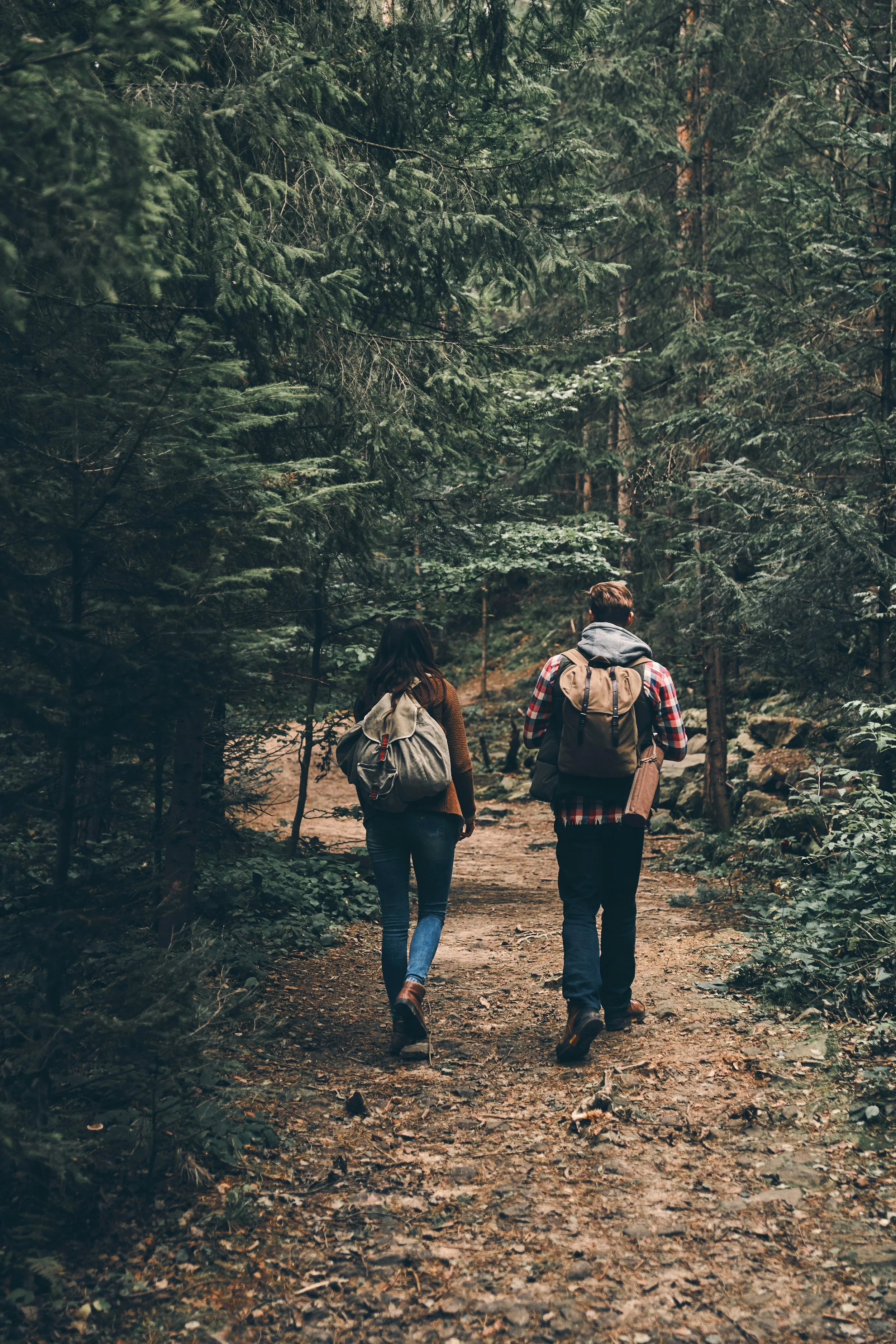
What Is Forest Bathing?
First things first: nobody is asking you to literally bathe in a forest.
Georgia describes forest bathing as connecting with your senses in a natural environment. Forest therapy is the guided practice she uses to help people enter that experience. Rather than being about exercise, distance, endurance, or knowing the names of everything around you, forest bathing is much more about paying attention to what is actually happening in your body and environment in the present moment.
You might notice the texture of a leaf, the temperature of the air, the weight of a rock in your hand, or the way the wind smells in one particular place at one particular time. You do not have to recognize bird calls, identify trees, forage for dinner, or hike five miles before noon. The practice is less conquer the wilderness and more hey, what’s actually happening right here?
Georgia also explains that forest bathing can involve more than our traditional five senses. It can include proprioception—our sense of where our bodies are in space—as well as imagination, intuition, and awareness of the relationship between ourselves and what is around us. In that sense, the practice becomes a way of shifting out of the constant stream of analysis and into a more embodied experience of being alive.
A revolutionary concept in the Year of Our Lord Infinite Scrolling.
You Don’t Have to Be an “Outdoorsy Person”
One of our favorite parts of this conversation came from a listener who basically said: I know I’m supposed to love nature…but I kinda don’t. Honestly? Valid.
Nature can be overwhelming if it isn’t familiar to you. Georgia points out that someone who didn’t grow up spending much time outdoors might get out of the car at a park, look at a huge wall of green, and feel anything but calm. It can seem loud, messy, crunchy, buggy, unpredictable, or just like too much sensory information all at once. That reaction doesn’t mean you’re doing nature wrong; it may just mean you need a smaller entry point.
Georgia’s suggestion is beautifully simple: start tiny. Instead of deciding you need to go on a three-hour hike, pick up one blade of grass. Hold it in your hand. Look at its shape. Notice its weight and texture. Smell it. You can even take it back inside if that feels better. The goal isn’t to force yourself into an experience that feels uncomfortable; it’s to build a relationship with the natural world at a pace that actually works for you.
That could also mean sitting with a houseplant, watching a candle flame, looking out the window at the sky, or visiting an indoor botanical garden where you can have the experience of being surrounded by plants without contending with heat, bugs, rain, or whatever else makes you want to nope right back into the air conditioning. As we dubbed it in the episode: microdosing nature.
There is no achievement badge for becoming Nature Girl™. The point is curiosity, attention, and slowly expanding your capacity to notice what’s around you.
Why Forest Therapy Can Feel So Different From Regular Life
Think about how much information your brain processes during an average day. There are texts, emails, work demands, social media, headlines, facial expressions, conversations, other people’s needs, and your own internal monologue constantly competing for your attention. Even our closest relationships require us to read cues, respond appropriately, figure out what other people are feeling, and manage all the stories our brains create about what their behavior might mean. Human connection is beautiful, but it also comes with a tremendous amount of input.
Nature can offer something very different. During the forest therapy walks Georgia guides, she often sees people settle into their own quiet spaces. They aren’t necessarily frolicking through wildflowers looking euphoric or having some cinematic spiritual awakening. Often, they simply become quieter, more curious, and less performative. With fewer expectations coming at them, they can begin paying attention to what their own bodies are actually doing.
That lack of performance is a powerful part of the experience. Your body doesn’t have to look good for a tree. A rock does not care whether you’re productive. A leaf has no opinion about your relationship status, your career trajectory, or whether your morning routine is sufficiently optimized. In a culture where so many of us have learned to experience our bodies through appearance, desirability, productivity, or usefulness, there can be something surprisingly freeing about simply experiencing yourself as an animal with a body.
Nature Connection, Trauma, and Getting Your Sense of Choice Back
That freedom also connects to something deeper: agency.
Georgia’s approach to forest therapy is guided rather than instructive. She might offer an invitation, but the participant decides how—or whether—to engage with it. Rather than saying, “Go rub this leaf on your skin,” she might invite someone to spend time with something in the area and notice what happens. They can sit, walk away, get closer, move farther back, or choose not to participate at all.
That can be especially meaningful for people who have learned to override their bodies. Georgia gives the example of holding different rocks and simply noticing which texture you prefer. Maybe the smooth one feels good. Maybe the rough one feels better. Maybe you don’t like either of them. These sound like tiny decisions, but that is exactly why they matter.
Experiences of trauma can interfere with our sense that we are allowed to have preferences, make choices, change our minds, or respond to what our bodies are telling us. Even outside of trauma, many of us become extremely practiced at bypassing ourselves in order to perform, please people, avoid conflict, or do whatever we think we’re “supposed” to do. A simple sensory experience can become an opportunity to practice something different: I have a body. My body notices things. I can prefer something. I can choose.
Those capacities don’t have to stay in the forest. They can come back into relationships, boundaries, decision-making, sex, work, and the rest of everyday life.
What Nature Can Teach Us About Relationships and Attachment
Nature can also offer a kind of relational experience that other humans sometimes can’t: steady presence without a lot of feedback attached to it.
Georgia shares how meaningful this became during an incredibly difficult period in her own life. After leaving what she describes as a cult-like experience and going through the collapse of a significant romantic relationship, she felt shattered. One of the only things she could do was walk through her neighborhood over and over again. Each time, the same trees were there. Day or night, she could round a corner and encounter something familiar, stable, and alive.
We talked about that consistency through the lens of attachment: nature as part of a much wider relational system. When all of our needs for safety, belonging, and connection become concentrated onto one or two people, those relationships can end up carrying an enormous amount of weight. By contrast, being in relationship with a broader living world can offer another kind of secure presence—one that doesn’t replace human relationships, but expands the field of connection around us.
There’s an ecological piece here, too. Georgia put it simply: we can’t love what we don’t know. If we never notice the tree outside our house, feel the clover underneath our feet, or pay attention to the way the natural world changes around us, it becomes easier to experience nature as an abstract collection of resources rather than something we are actually in relationship with. Reconnection may be good for us individually, but it can also shape how much we care about protecting the world around us.
How to Start Connecting With Nature Right Now
Here’s perhaps the best part: you don’t even have to go outside to begin.
Georgia suggests starting with your own hands. Look at your skin. Notice the texture of your fingernails. Feel your fingertips against your palm or the back of your wrist. Pay attention to the temperature of your skin, the space between your fingers, or what happens when you make a fist and then release it. What does your hair feel like today? Your cheeks? Your eyebrows?
You don’t need to change anything. You’re simply noticing.
And that noticing matters because you can’t feel what your skin was like yesterday or notice the exact temperature of your fingers tomorrow. You can only experience what is happening right now. That’s presence, and it doesn’t require a meditation cushion, a wellness retreat, or an Instagrammable national park.
Maybe that practice eventually turns into noticing rain on your skin, watching clouds move for five minutes, holding the leaf of a houseplant, or joining Georgia for an actual forest therapy walk. Maybe it doesn’t. The goal isn’t to turn nature connection into one more self-improvement assignment you’re failing to complete.
It’s just an invitation to notice more of the world you’re already part of.
As Georgia so perfectly sums up this episode: Come to your senses.
Meet Forest Therapy Guide Georgia Bromehead
Georgia Bromehead became the first practicing Association of Nature and Forest Therapy Guide in Nashville and has been guiding since 2019. She has given talks and interviews about the healing power of nature connection, guided forest bathing internationally and across Tennessee, and been featured on podcasts, local radio, and in publications.
Georgia is also a psychotherapist with a Master’s in Clinical Mental Health Counseling, and her work as a therapist and forest therapy guide continually inform one another.
You can find upcoming public forest bathing walks, inquire about private walks, or learn more about therapy with Georgia at www.foresttherapynashville.com and on Instagram @forest_therapy_nashville.
And listen to the full episode of But For Real for our entire conversation about forest therapy, embodiment, trauma, attachment, nature, why all of us desperately need to look at stuff again—and, naturally, whether Nashville ramen has gotten completely out of hand.