
If you’ve ever thought, “I know why I react this way—so why does it keep happening?” you’re not broken. You’re not resistant. And you’re definitely not failing at healing.
You’re likely running up against the limits of your window of tolerance.
This concept explains why insight alone doesn’t always translate into change—and why healing that actually sticks has far more to do with your nervous system than your willpower.
If you’ve done therapy, read the books, journaled your face off, and still find yourself panicking, shutting down, or reacting in ways you swore you’d outgrown, this framework matters. A lot.
Let’s break it down in a way that actually makes sense in real life—not just on a nervous-system infographic.
What is the window of tolerance in trauma healing?
The window of tolerance is the range of nervous system activation where you can think, feel, and respond without becoming overwhelmed or shut down.
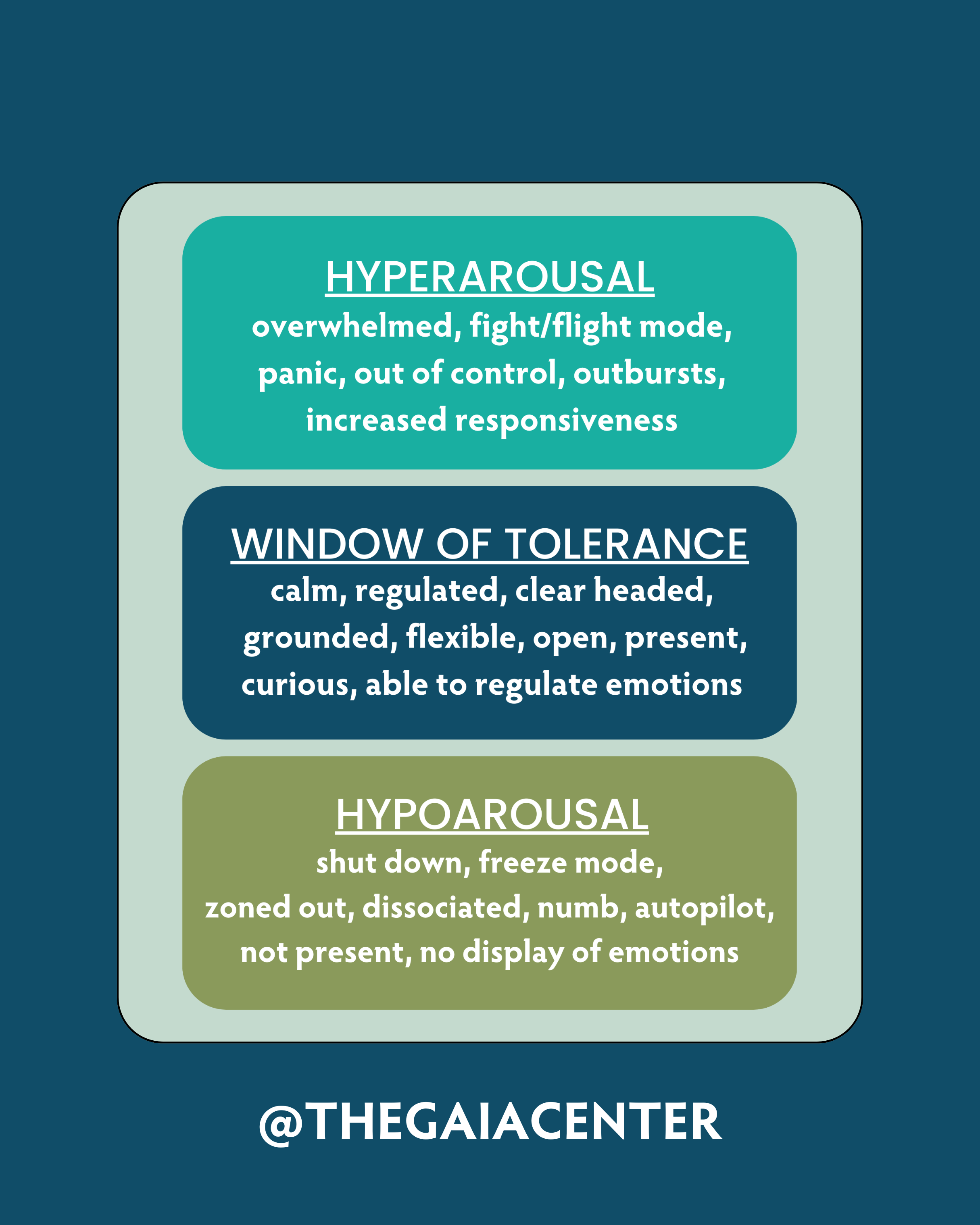
The term window of tolerance was coined by psychiatrist Dan Siegel to describe the zone where your nervous system can handle stress without flipping into survival mode.
When you’re inside your window:
You can feel emotions without being consumed by them
You have access to choice, perspective, and curiosity
You can stay present in your body and in relationships
When you’re outside your window:
Your nervous system takes the wheel
Logic, insight, and “good coping skills” go offline
You’re reacting, not choosing
This isn’t a mindset issue. It’s physiology.
And when trauma is part of the picture, the window often gets a lot narrower.
This is why nervous-system–informed therapy focuses less on “fixing reactions” and more on helping your body experience safety in real time.
What does it feel like to be outside your window of tolerance?
Outside your window of tolerance, your nervous system shifts into survival mode—fight, flight, freeze, or shutdown—reducing choice and connection.
Most people experience being outside their window in one of two primary ways (sometimes both).
Hyperarousal: too much, too fast
This is what people usually call anxiety or “being on edge.”
It can look like:
Racing thoughts or panic
Anger, irritability, or reactivity
Hypervigilance and constant scanning
Feeling urgent, pressured, or unable to rest
Your body is mobilized for threat—even if nothing dangerous is actually happening right now.
Hypoarousal: too little, too numb

This one gets talked about less, but it’s just as common.
It can look like:
Numbness or dissociation
Feeling foggy, flat, or disconnected
Low energy, shutdown, or collapse
“I don’t care” that actually means “I can’t feel safely”
Both states are protective trauma responses, not personal flaws. Your nervous system is doing exactly what it learned to do to keep you alive.
How does trauma affect the window of tolerance?
Trauma narrows the window of tolerance by training the nervous system to detect danger quickly and making it harder to return to a felt sense of safety.
Trauma isn’t just about what happened—it’s about what your body learned from what happened.
When stress, danger, or emotional overwhelm happen repeatedly (especially without support), your nervous system adapts by:
Becoming faster to activate
Staying activated longer
Struggling to settle back into safety
This is why window of tolerance trauma work focuses less on erasing symptoms and more on increasing capacity.
And trauma doesn’t have to mean one catastrophic event. Relational wounds, chronic stress, identity-based harm, medical trauma, or growing up in unpredictable environments all shape the nervous system in this way.
Your body learned that staying braced was safer than relaxing. That lesson doesn’t disappear just because you understand it.
Why doesn’t understanding trauma automatically heal it?

Insight alone doesn’t heal trauma because survival responses live in the nervous system, not the thinking mind—even when you “know better.”
This is where so many deeply self-aware people get stuck.
You can know:
Why you react the way you do
Where the pattern came from
What a healthier response would be
…and still have your body slam the brakes or hit the gas.
That’s because trauma responses aren’t choices—they’re reflexes. They happen faster than conscious thought. Insight can help you make meaning of your experience, but it doesn’t automatically teach your nervous system that it’s safe to do something different.
For many people, this is where somatic and relational trauma work—especially in more focused, immersive formats—creates movement that years of insight alone couldn’t.
This is why people often say:
“I understand myself, but my body didn’t get the memo.”
Your body didn’t miss it. It just learned a different lesson.
Is healing about staying regulated all the time?

Healing isn’t about staying calm—it’s about expanding your capacity to move through stress and return to safety without getting stuck.
Let’s clear this up: healing is not about being chill, unbothered, or “regulated” 24/7.
A healthy nervous system is flexible. It can:
Mobilize when something matters
Feel anger, grief, desire, or fear
Settle again without collapsing or spiraling
You will leave your window of tolerance sometimes. That’s not failure—that’s being human.
The real work is learning how to:
Notice when you’re leaving the window
Support your system in returning
Spend less time stuck in survival
Healing is about repair, not perfection.
How can you expand your window of tolerance?
You expand your window of tolerance through repeated experiences of safety, attunement, and nervous system regulation—not force or perfection.
There’s no hack for this—but there is a path.
Bottom-up, body-based support
Breath, movement, sensory input, and orienting help your body feel safety directly, without needing to “think your way there.”

Relational safety
Co-regulation matters. Nervous systems heal in the presence of other regulated nervous systems. This is why therapy, groups, and secure relationships are so powerful.
Slowness and repetition
Capacity grows gradually. Small moments of safety count more than dramatic breakthroughs.
Context matters
You can’t regulate inside environments that keep harming you. Identity safety, values alignment, and systemic realities are part of nervous system health—not distractions from it.
Expanding your window of tolerance isn’t about trying harder. It’s about giving your body enough evidence that safety is possible now.
Why does the window of tolerance matter in therapy?

Therapy is most effective when it expands your window of tolerance, helping your body experience safety—not just analyze past experiences.
When therapy focuses only on insight, clients often plateau. When it includes nervous-system–informed, relational, and embodied work, something shifts.
You’re not just talking about your life—you’re having new experiences inside the therapeutic relationship.
This is why trauma-informed therapy isn’t about digging endlessly into the past. It’s about helping your nervous system learn, in real time, that:
You can feel and stay present
You can have needs and remain connected
You can move through intensity without being overwhelmed
That’s not self-improvement. That’s healing at the level where change actually happens.
You’re Not Broken—Your Nervous System Is Brilliant
If your healing has felt inconsistent, slow, or frustrating, it doesn’t mean you’re doing it wrong. It means your nervous system has been protecting you for a long time.
The goal isn’t to get rid of your responses. It’s to build enough safety that you have more choice about how you respond.
Healing isn’t about becoming someone new. It’s about expanding your capacity to be who you already are—without living in constant survival mode.
