
Ever feel like you’ve spent YEARS in therapy, can articulate exactly where your attachment wounds came from, have an impressive vocabulary of therapy-speak, and yet… your body still hasn’t gotten the memo? You know why you get anxious when someone’s tone changes, but that doesn’t stop your stomach from dropping when it happens. You know you’re allowed to rest, but the second you sit down, your brain starts inventorying everything you should be doing. You can explain your emotional patterns with the precision of someone defending a doctoral dissertation, but actually FEELING those emotions is a whole other story. (The irony of being a therapist who also does this is not lost on us. 🙃)
In this episode of But For Real, we’re diving into somatic healing, nervous system regulation, and what it actually means to feel at home in your body. We’re exploring why intellectual understanding is only one piece of the healing process, how our culture has conditioned us to disconnect from our physical selves, and why embodiment can feel so damn uncomfortable at first. We’re also unpacking some of the misconceptions about nervous system regulation that have taken over the internet. Because somewhere along the way, even healing has become something we’re expected to optimize and excel at.
Meet Ha Cathey

We’re joined for this conversation by the wonderful Ha Cathey, founder and executive director of Ha.Lé Integrative Health and a licensed therapeutic massage and bodywork practitioner with more than 20 years of clinical experience. Ha specializes in somatic healing and integrative healthcare, bringing together trauma-informed care, bodywork, and Eastern and Western healing traditions. Her approach emphasizes the wisdom of the body, the importance of sensation, and creating space for healing to unfold organically rather than forcing a particular outcome. We especially appreciate how Ha’s work challenges the idea that our bodies are problems to be solved, offering instead an invitation to develop a more curious, compassionate relationship with ourselves.
Throughout our conversation, Ha brings a beautiful blend of clinical experience, philosophical curiosity, spirituality, and grounded, practical wisdom about being human. She also shares some of her personal experiences with grief, caring for her mother at the end of her life, and participating in Buddhist rituals and ceremonies in Vietnam. These experiences inform a conversation that goes well beyond the mechanics of nervous system regulation and into some of the bigger existential questions about what it means to inhabit a body. And, importantly, how we can honor our physical existence rather than spending our lives trying to transcend it. You can learn more about Ha Cathey and her work here.
WTF Is Somatic Healing, Anyway?
If you spend any amount of time in mental health or wellness spaces online, you’ve probably encountered the word somatic approximately 847 times. There are somatic exercises, somatic movement practices, somatic therapy, and an endless supply of videos promising to help you release trauma from various parts of your body. But at its core, somatic work is about bringing awareness to our lived, physical experience and allowing ourselves to experience sensation. Rather than exclusively talking about what we feel, we’re also getting curious about how we experience those feelings in our bodies.
As Ha explains, breath, sound, movement, and awareness can all be ways of reconnecting with sensation. That might mean noticing the tightness in your chest when you’re overwhelmed, the warmth that comes with feeling connected to someone, or the tension building in your hands when you’re frustrated. The point isn’t necessarily to immediately change those sensations or even figure out what they mean. Sometimes, the most meaningful thing we can do is simply acknowledge that they’re there. And for those of us who are accustomed to analyzing every damn thing we experience, that can be surprisingly challenging.
It’s also important to acknowledge that connecting with the wisdom of the body is not some groundbreaking discovery of modern Western psychology. Indigenous communities and many longstanding healing traditions have recognized the interconnectedness of our physical, emotional, spiritual, and communal experiences for generations. Long before The Body Keeps the Score became required reading for every therapy enthusiast, people were practicing embodied forms of healing. As these ideas become increasingly popular in Western wellness spaces, we have a responsibility to recognize the traditions and communities that have long held this knowledge.
When You’re Really Good at Understanding Your Feelings… But Not Actually Feeling Them
In our Step Into My Office segment, we hear from a listener who signs their submission “A Brain With No Off Switch.” They describe constantly overthinking, anticipating what comes next, and feeling pressure to be productive even when they’re exhausted. They’ve gotten pretty good at understanding their emotions intellectually, but when their therapist encourages them to actually feel those emotions, they’re not entirely sure how. Both of us had a moment of wondering whether we had somehow written this submission ourselves, because WOW, relatable.
Intellectualizing our emotions can be a way of creating distance from experiences that feel overwhelming, unfamiliar, or unsafe. And intellectual understanding is genuinely valuable — we’re certainly not suggesting that insight-oriented talk therapy is useless. But being able to explain why something hurts isn’t necessarily the same as allowing yourself to experience that hurt. We can become incredibly skilled at narrating our emotional lives without spending much time actually inhabiting them.
Ha suggests beginning by noticing when the brain takes over, almost as though you’re putting a little sticky note on your thoughts that says, “Oh, I’m thinking again.” You don’t have to argue with the thought, eliminate it, or criticize yourself for having it. Instead, you might gently redirect some of your attention toward physical sensation and notice what’s happening there. And if the answer is simply that you feel uncomfortable, that’s information worth acknowledging, too. There doesn’t need to be some profound revelation about your childhood every time you check in with yourself.
How We Became Brains Dragging Around Bodies
One of our favorite tangents in this conversation is about how we’ve been culturally conditioned to prioritize the mind over the body. From educational systems that reward intellectual achievement to workplaces that encourage us to ignore our physical needs in the name of productivity, many of us have learned that our brains are supposed to be running the show. Our bodies are often treated as inconvenient little vehicles that need to be fed, maintained, disciplined, and occasionally put to sleep so we can get back to doing Important Things™. And then we wonder why we have such a difficult time recognizing what our bodies need.
For some of us, religious conditioning has also played a significant role in this disconnection. Certain spiritual traditions and interpretations teach us to view the physical body as something sinful, shameful, or less worthy than the soul or spirit. When bodily desires, pleasure, sexuality, and even ordinary physical functions become sources of shame, disconnecting from sensation can start to feel like a moral obligation. That kind of conditioning can linger long after we’ve intellectually rejected the beliefs we grew up with.
We also get into some existential territory here, exploring the relationship between embodiment, spirituality, and our fear of death. Regardless of what we believe about consciousness or what happens after we die, our physical existence is something we’re experiencing right now. We have bodies that need nourishment, rest, connection, and care, and those needs aren't somehow less meaningful than our intellectual or spiritual pursuits. What would it look like to regard our physical existence as inherently valuable, rather than something we’re supposed to overcome?
Nervous System Regulation Does NOT Mean Being Calm All the Time
We’re both self-proclaimed nervous system nerds, so naturally, we had to get into the internet’s obsession with nervous system regulation. It’s genuinely exciting that more people are learning about stress responses and becoming curious about how their nervous systems function. But as with so many psychological concepts that make their way into pop psychology, some of the nuance gets lost along the way. Nervous system regulation can start to sound like a permanent state of peacefulness that we should all be aspiring to achieve.
A regulated nervous system is not one that never experiences anger, fear, grief, or activation. Our nervous systems need to be responsive to what’s happening within us and around us, and sometimes that means mobilizing in response to a threat or experiencing intense emotion. The capacity to move between different states and respond flexibly to our experiences is more useful than trying to remain perpetually calm. Being a human being necessarily involves experiencing discomfort, and healing doesn’t make us exempt from that reality.
We also have to be careful not to turn nervous system regulation into yet another way of judging ourselves. If we’re constantly monitoring whether we’re sufficiently regulated, getting frustrated when we experience activation, or evaluating our healing progress based on how rarely we feel uncomfortable, we may be reinforcing the very patterns of control we’re trying to move away from. There’s a difference between developing tools that support our wellbeing and becoming preoccupied with eliminating every unpleasant sensation. Your nervous system doesn’t need a performance review, y’all.
Somatic Healing Isn’t Another Self-Improvement Assignment
One of the most powerful things Ha says in this episode is, “We wouldn’t force a leaf to unfurl. We wouldn’t force a baby to walk.” And yet, when it comes to our own healing, we’re often incredibly impatient with ourselves. We want the breakthrough, the emotional release, the evidence that something is changing — preferably within the allotted 50-minute therapy session. We live in a culture that values force, efficiency, and measurable results, and it makes sense that we bring those same expectations into our healing work.
Val shares an example from her Sensorimotor Psychotherapy training about noticing tension building in the hands. Our immediate impulse might be to crack our knuckles, shake out our hands, or otherwise do something to discharge that tension. And while there can certainly be value in movement, there can also be value in allowing ourselves to notice the sensation and observe what it does next. Does it shift, intensify, move somewhere else, or gradually dissipate? What happens when we give our bodies a little room to respond without immediately deciding what that response should be?
This is especially relevant when we think about the social media fascination with dramatic emotional releases and somatic breakthroughs. A healing experience doesn't necessarily need to involve sobbing, shaking, or having some earth-shattering realization about your life. Sometimes it looks like noticing a sensation you would ordinarily ignore, allowing yourself to experience it briefly, and then moving on with your day. Ha emphasizes that there is no required outcome in this kind of somatic work. You don’t need to manufacture an experience for it to count.
Reconnecting With Your Body When It Feels Uncomfortable
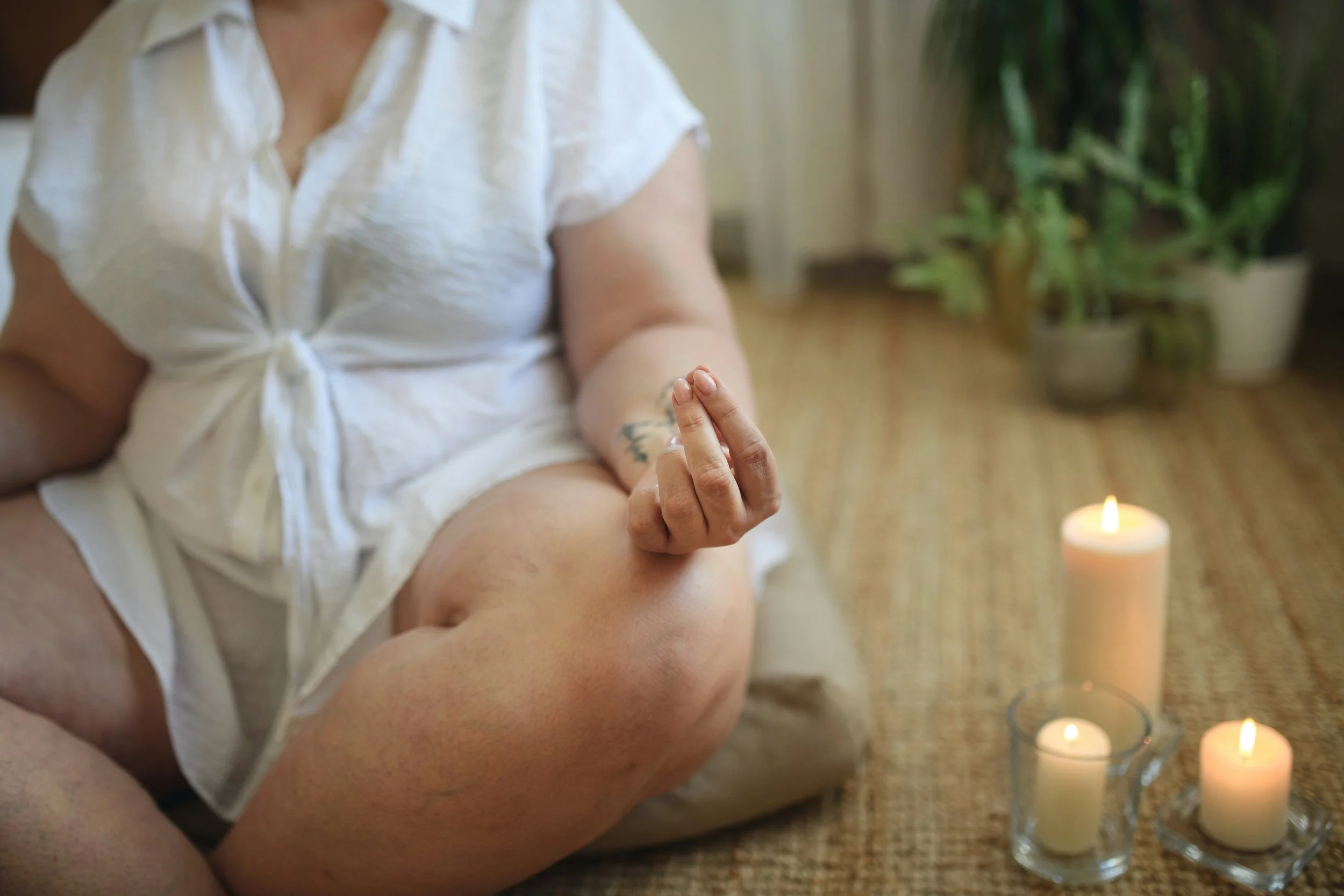
If you’ve spent years disconnecting from your physical sensations, jumping straight into an intensive body-based practice might not feel particularly supportive. For some people, bringing attention inward can initially increase anxiety or bring up sensations that feel overwhelming. This can be especially relevant for people with trauma histories or complicated relationships with their sensory experiences. Reconnecting with your body doesn’t have to mean immersing yourself in every uncomfortable feeling all at once.
Instead, consider starting with small, manageable moments of awareness throughout your day. You might notice the texture of your favorite blanket, the warmth of your morning coffee in your hands, or the sensation of your feet making contact with the ground. You might notice whether your jaw is clenched or whether you’ve been holding your breath while responding to an email. And if paying attention to a particular sensation feels like too much, you have permission to redirect your attention or stop altogether. Working with a qualified, trauma-informed practitioner can also be helpful if connecting with your body consistently feels distressing.
We’d also encourage you to explore pleasurable sensations, not just the uncomfortable ones. Embodiment isn’t exclusively about processing trauma or getting better at tolerating distress. It’s also about being present for the things that make life feel delicious — dancing to music you love, snuggling into really good linen sheets (Ha’s current obsession), making art, or enjoying the warmth of sunlight. These experiences don’t need to be justified by their therapeutic benefits. Sometimes it’s enough that something feels good.
Healing Is Collective, Too
Another important part of our conversation is the relationship between our individual nervous systems and the communities we inhabit. Ha shares her experience traveling to Minneapolis at the invitation of her friend and colleague, Dr. Brian Meyer, to gather with a group of healthcare and healing professionals. The group included therapists, physicians, nurses, acupuncturists, herbalists, and other practitioners who were carrying the emotional weight of what their community had been experiencing. Rather than trying to resolve everything they were feeling, the gathering created space for them to acknowledge what they were holding in their own bodies while caring for others.
We love this example because so much of the contemporary conversation about healing places the responsibility squarely on the individual. We’re told to regulate our nervous systems, establish better boundaries, meditate, and practice self-care, often without much acknowledgment of the conditions creating our distress. But our bodies are responding to real environments, relationships, economic pressures, discrimination, and collective grief. We cannot expect individual healing practices to compensate entirely for systemic harm or an absence of meaningful community support.
This doesn’t mean that personal healing work is pointless — quite the opposite. Developing a more compassionate relationship with ourselves can support our ability to remain present with others and participate meaningfully in our communities. And being supported by other people can create opportunities for connection and healing that are difficult to access in isolation. We need space to grieve together, experience joy together, care for one another, and work toward creating conditions in which more people can feel safe. Healing is both deeply personal and profoundly relational.
…But For REAL, What If Your Body Isn't Something You Need to Fix?
So many of us approach our mental and physical wellbeing with an underlying assumption that there’s something about ourselves that needs correcting. We want to be less anxious, less reactive, less sensitive, more productive, more resilient, and generally less inconvenienced by the experience of being human. But what if we spent some of that energy developing a relationship with our bodies rather than trying to control them? What if we got curious about our needs and sensations without immediately evaluating whether they were acceptable?
There’s something wonderfully countercultural about allowing yourself to simply exist in your body without constantly demanding something from it. You can experience pleasure without earning it, rest without optimizing it, and notice an emotion without immediately turning it into a problem-solving exercise. You can also acknowledge that some days, being present in your body is going to feel more accessible than others. Embodiment is an ongoing relationship, not a destination you arrive at after completing enough healing work.
If this conversation resonates with you, we’d love for you to listen to Episode 58 of But For Real wherever you get your podcasts or watch us on YouTube. Our conversation with Ha is full of thoughtful insights, existential rabbit holes, and some very relatable moments about the challenges of being a human with a body. You can also explore Ha’s work at Ha.Lé Integrative Health if you’re curious about somatic bodywork and integrative healing. And if you’re interested in exploring embodied, trauma-informed psychotherapy, The Gaia Center for Embodied Healing is here to support you in developing a more meaningful relationship with yourself. Not because you need fixing, but because you deserve to experience more of what it means to be alive.
But For Real Podcast is not a substitute for individualized mental health treatment or healthcare. This podcast is solely for entertainment and educational purposes. If you are in crisis, please utilize crisis support services, such as the Crisis Text Line (Text START to 741741 in the US) or the 988 Suicide & Crisis Lifeline (Call 988 in the US), or visit findahelpline.com for international resources.