But For Real Episode 29: The Self-Growth Industrial Complex 🔍
Conversations around self-growth are all over every media platform these days – and while introspection and commitment to growth and change is important, it’s easy for it to be an all consuming trap that’s actually the opposite of growth.

In this episode, Valerie and Emerson take a deep dive into the history of the self-growth industrial complex, explore what’s useful, debunk what’s not, and give you real advice on how to tackle self-improvement without spiraling.
This episode covers:
Tea & Crumpets
Emerson is currently loving the Abbey Yung hair method which has her hair looking better than ever. 💁🏻♀️
Valerie is obsessed with Bob Trevino Likes It, a semi-autobiographical 2024 American comedy drama film written and directed by Tracie Laymon.
Step Into My Office: How do I know when self-growth is actually healthy vs. when it’s becoming too much?
A listener wrote in about how how they feel like they’re drowning in self-improvement. With every other social media post being about healing or supplements or rewiring your nervous system, it can be hard to determine if you’re actually practicing self-care or just obsessing over fixing yourself.
Val and Emerson dive a bit deeper later in the episode, but the take home for this segment was practicing discernment and seeing if you’re engaging in particular practices because it’s truly serving you or if it’s because you feel like you HAVE TO due to some external pressure. While rigidity can be appropriate in some circumstances, it can be worthwhile to question your rigidity with particular patterns.
The DSM: The Self-Growth Industrial Complex
Let’s talk about the rise of self-development, why TF we are all so OBSESSED with being the “best version of ourselves” and how that can show up in healthy and unhealthy ways.
The Roots of Personal Development
This segment starts with an exploration of the roots of personal development, starting with Ralph Waldo Emerson’s Self Reliance (1841) which framed individual growth as almost a moral duty. Add in the New Thought movement (“your thoughts shape your reality”), and you’ve got the foundation for manifestation TikTok 150 years early.
As the 20th century dawned, the self-help industry boomed with figures like Dale Carnegie (How to Win Friends and Influence People, 1936) and Norman Vincent Peale (The Power of Positive Thinking, 1952). Both positioned self-development as the key to success in work and relationships.
In the 1960s/70s with Abraham Maslow (hierarchy of needs, self-actualization) and Carl Rogers (unconditional positive regard, client-centered therapy), self-growth took on a psychological and spiritual edge. The idea: everyone has untapped potential waiting to be unlocked. Enter Esalen Institute retreats in Big Sur — yoga, hot tubs, psychedelic explorations — the birthplace of the “personal development retreat.
Then in the 80s and 90s, people like Tony Robbins and Stephen Covey turned self development into a multi-billion-dollar business. The focus shifted from inner wholeness to outer performance — maximizing productivity, climbing ladders, hustling harder.
Combine neoliberal “pull yourself up by your bootstraps” ideology with Instagram’s highlight reels, and you get our current pressure-cooker. The wellness/self-help industry is now valued at over $13 billion in the U.S. (MarketResearch.com, 2022). Influencers and coaches stepped into the guru role, offering personal growth not just as books or workshops, but as daily content feeds.
Why It Boomed
Economic precarity – When systems fail us (wages stagnating, housing unattainable), personal growth feels like the only control lever.
Individualist culture – Especially in the U.S., self-development is framed as both a responsibility and a moral good.
Marketability – Growth sells. A better you = a product someone can market (from gym memberships to gratitude journals to $10K masterminds).
Why We’re Obsessed with Growth

It’s human to be obsessed with growth. With factors like fear of falling behind, seeking control in chaos, and cultural myths, we’re designed to hyperfixate on self-improvement.
An important note: There’s a difference between wanting to grow because life is asking it of you… and hustling to grow because you’re terrified of not being enough.
When Does Self-Love Become Self-Obsession?
Rigid routines: Needing a 15-step morning ritual to feel “okay”, lack of compassion for missing a gym day or not doing your morning reading
Endless self-fixing: The subtle belief, “I’ll finally be worthy when I heal this last thing.”
Isolation: Over-focus on “me” at the expense of relationships, community, and service.
Paradox: The pursuit of authenticity becomes performative (IG captions: “Just me, raw and real… after 40 takes and perfect lighting”).
HOT TAKE! If your self-care routine stresses you out more than skipping it, it’s probably not self-care.” 🙅🏻♀️
So, What’s the Middle Path?
Healthy self-love is compassionate self-discipline, rest, joy, boundaries.
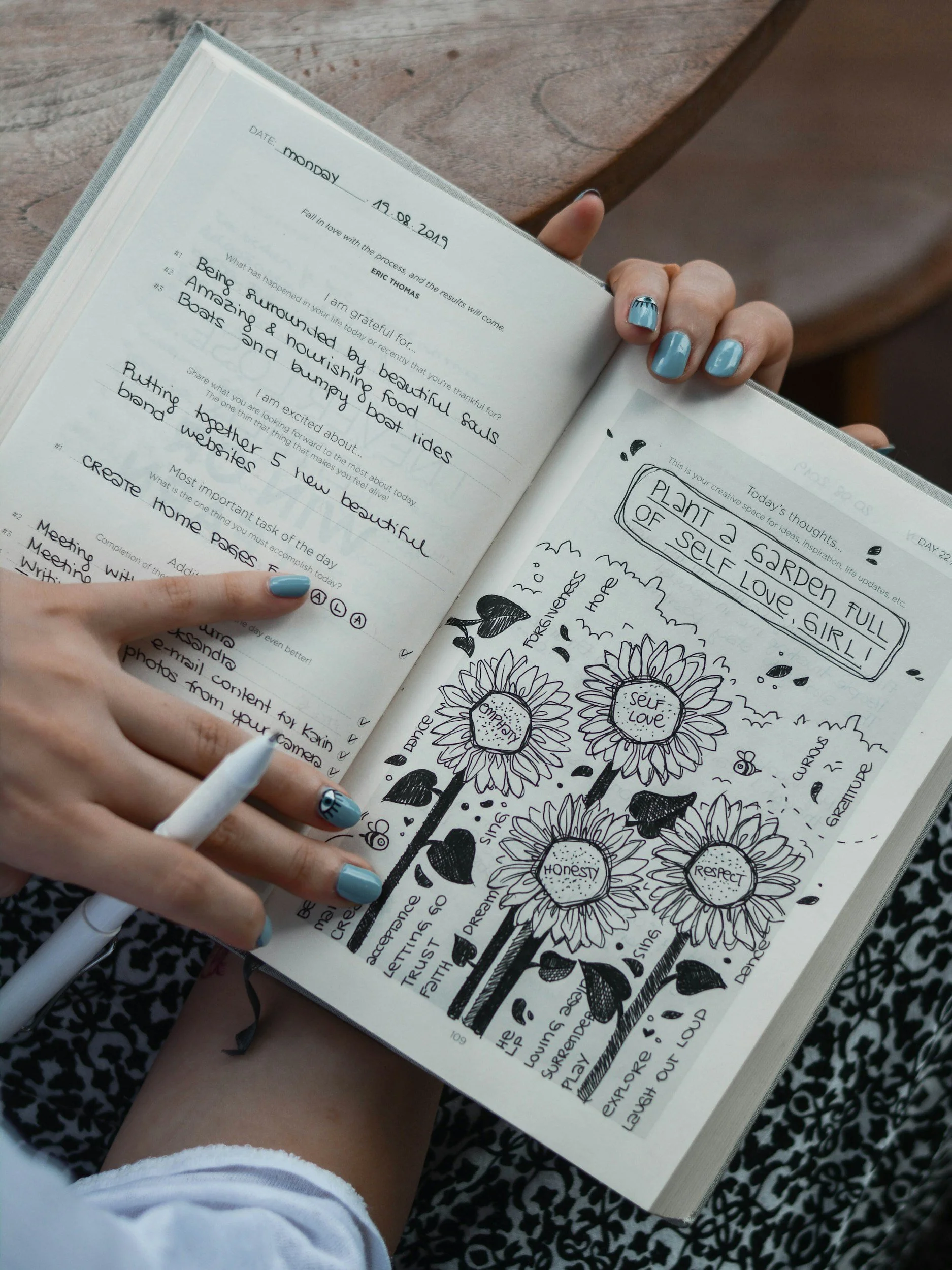
Check your motivation: Are you improving from curiosity and desire — or from shame and fear?
Signs it’s healthy: You feel freer, kinder, more connected.
Signs it’s not: You feel more rigid, isolated, or perpetually “not enough.”
Self-development isn’t about endless growth or constant upgrading. Sometimes it’s about rest, sometimes it’s about connection, sometimes it’s about saying no. If your self-improvement is making you feel worse, maybe it’s self-obsession in disguise. How can you honor your spark without setting yourself— or your relationships— on fire?
Now That’s What I Call…OKAAAAY
Em’s pick for the week is Love Myself by Olivia O’Brien. 25 year old Olivia O’Brien rose to fame in 2016 when her original song “i hate u i love u” was picked up by singer Gnash, the song appeared on his third EP and she started to blow up from there! Love Myself was released in 2019.
Val’s pick is Adventures in Success by Will Powers - Will Powers was the stage name used by celebrity photographer Lynn Goldsmith when she created a self-help comedy music album!
Fire Dumpster Phoenix
Val’s find for this week is about how The Greenagers group gets youths to love the outdoors. Based in Berkshire County, Massachusetts, it aims to instill in teens the value of environmental stewardship. The crews do work such as clearing ground for new trails, spreading gravel for accessible paths, and removing invasive plants from community lands, in addition to undertaking more technical projects involving stonework.
Emerson’s find for this week is about how 9 year old aspiring pediatric neuro-surgeon Aiden Wilkins very well may become the youngest doctor in the world! At only 9 years old, Aiden attends classes 3 days a week at Ursinus College in Pennsylvania where he is studying anatomy and chemistry. Aiden says he wants to be a pediatric neuro-surgeon because he wants to help kids his own age. AMAZING!
If you want to learn more about any (or all) of these topics, click the podcast player at the top of this post or the YouTube video down below to listen to the full episode and dive in with us.
Resources + Stuff Mentioned in This Episode:
Connect with Us:
Send a story or ask for advice: butforrealpod@gmail.com
But For Real on IG: @butforrealpod
The Gaia Center on IG: @thegaiacenter
Val on IG: @valkaymartin
The Gaia Center website: www.gaiacenter.co
DISCLAIMER: But For Real Podcast is not a substitute for individualized mental health treatment or healthcare. This podcast is solely for entertainment and educational purposes. If you are in crisis, please utilize crisis support services, such as the Crisis Text Line (Text START to 741741 in the US) or the 988 Suicide & Crisis Lifeline: (Call 988 in the US), or visit www.findahelpline.com for international resources.
